Förlorad i översättning (Lost in translation)
A retrospective travelogue of my week in Stockholm.
I was lucky enough to be hosted by my good friend Naomi Nowak, a painter/graphic novelist/jeweler/magical fairy, who was invited by Stockholm’s Kulturhuset to take part in a drawathon against Italy and France. Each team consisted of four of that countries finest in the graphic novel medium, and with that, they battled to the sound of The Clash, The Smiths, and even an instance of an Elvis Presley song. When the competition ended, and the victors Italy, I talked to the hip and talented: a news television designer, painter, video artist, and several other comic artists. Under discussion was not the, then currently, invasion of Iraq, but the classic American television shows that — according to them — were recent to Swedish airwaves. In fact, the only physical attributes that signified I wasn’t in Kansas anymore, was the prevelance of healthy bodies, co-ed restrooms, and the apparent massive dose of funds being pumped into the arts.
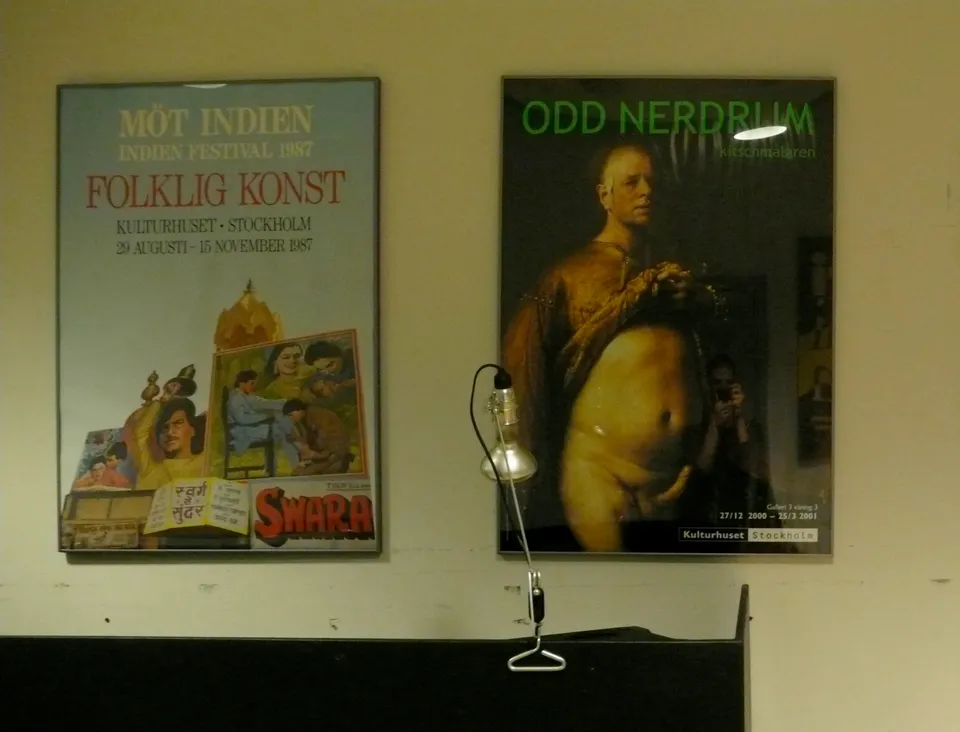
I managed to sneak away from the crowds for ten minutes to stealthily inspect the hallways of the Kulturhuset. People are one thing, but if I was to soak up Sweden, I felt I needed to see and capture every detail: yes, even the style of linoleum buildings opted for. Before an office door, I found a reprinting of one of my favorite painters, Odd Nerdrum. A Norwegian figurative painter whose work recreates the style of Caravaggio, in Michaelangelic scenes twisted by the subjects. There Odd Nerdrum stood, for it is a self portrait, with an erection so profound that it creates the triangle of viewing necessary for any popular work of art. Needless to say, this specific painting was a piece you’d be hardpressed to find in an office hallway, much less a government institution, in America.
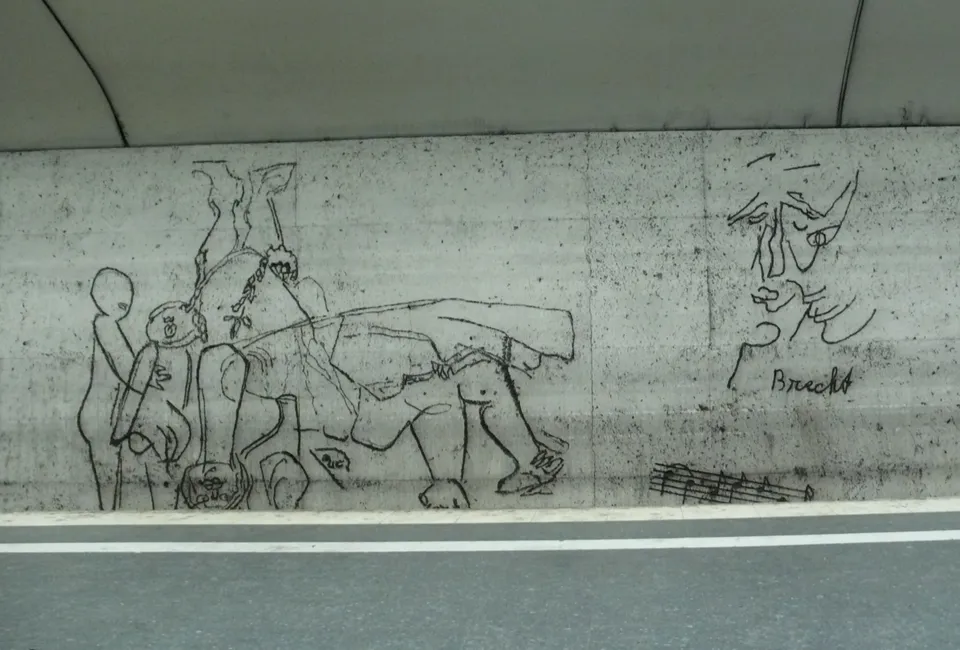
Among the check list I had for Sweden was to visit a thrift shop, so, the trooper that Naomi was, we traveled to a thrift shop on the outskirts of town. Waiting for the train, I couldn’t help but stare with mouth agape, at the deep etchings of Brecht drawings and poetry on the train tunnel walls. Their beauty, realism, and darkness stark against the sterile cleanliness of the tunnels. There wasn’t a bit trash or dust about us, so that his dark works, rough illustrations, and realist beauty bounced from the concrete walls of the sterile tunnel as if I was watching an IMAX 3D movie.
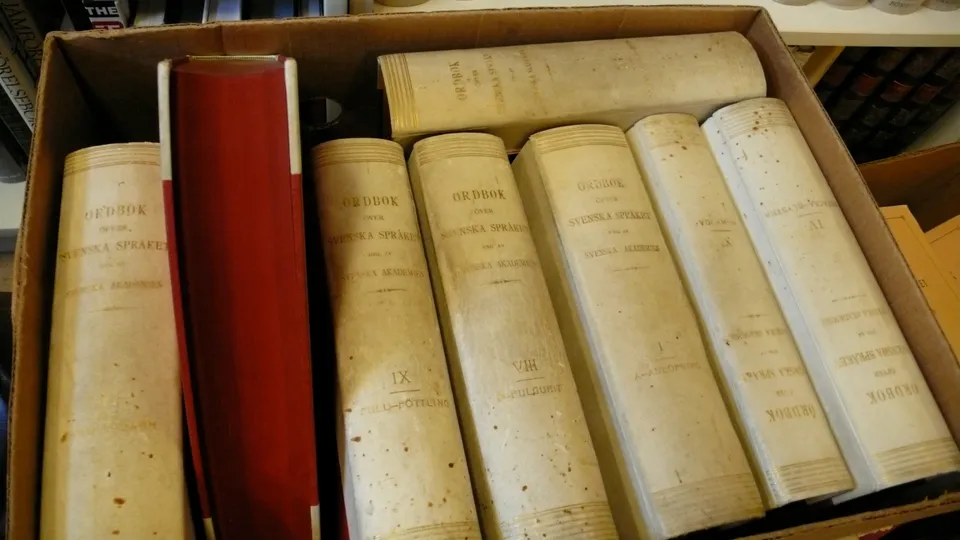
We arrived at what could’ve been a thrift shop anywhere in the world. Yet, again, the cleanliness told of a location otherwise. To the books, directly, I went, to find a heeping collection of outdated material unusual for a thrift shop collection where I’m from. The oldest dictionary you can find in a Pittsburgh thrift shop would be dated somewhere around the 1960s, but I managed to find a whole dictionary set dating back to 1890! Bound in white leather — splotched with marks from sun exposure — and red dyed paper tips, I discovered part of the reasons I decided upon Sweden as my location for a vacation in the first place.
Though Germany boasts the invention of the letter press (which brought about mass production, and, therein, mass distribution of literature), Sweden’s innate sense of simplistic, efficient design sensibility was perfect for book making. As a dictionary collector/hobbyist, I was sure, and proven correct, that even a random thrift shop would hold a menagerie of fine examples of Swedish book making. Among my find of the dictionary series, which, to my chagrin, was incredibly too heavy to carry back to my friend’s apartment (much less in an airplane), I found a book on Congo filled with etchings of tribal life and animals (Tre År i Kongo by Möller, Pagels, and Gleerup; 1887). This, I carried cradled in my arms the whole train trip home. My head didn’t stay in the past, however, and as a souvenir for a friend, I purchased a crisp copy of Sweden’s version of Harry Potter and the Goblet of Fire. To this, my friend warned me that the flavor in which the characters are portrayed in English, had, unfortunately, paled through the speedy translation into Swedish. Of that, I will not be aware of. At least not anytime soon.

Naomi is quite an example of Sweden’s eccentricity, as well. The daughter of a Polish mother and Hungarian father, she knows not only Polish, Hungarian, and Swedish proficiently, but has also taught herself French and Italian. Her three graphic novels have been so widely distributed that my public library holds two copies of each issue. This isn’t to boast her popularity to a level without representation of reality, but to express the kind of emphasis Sweden’s trust puts into its cultural patrimony — it’s veritable fountain of healthy ideas, arts and sciences. Alas, this is Nobel’s country! But isn’t that obvious to you, dear reader.
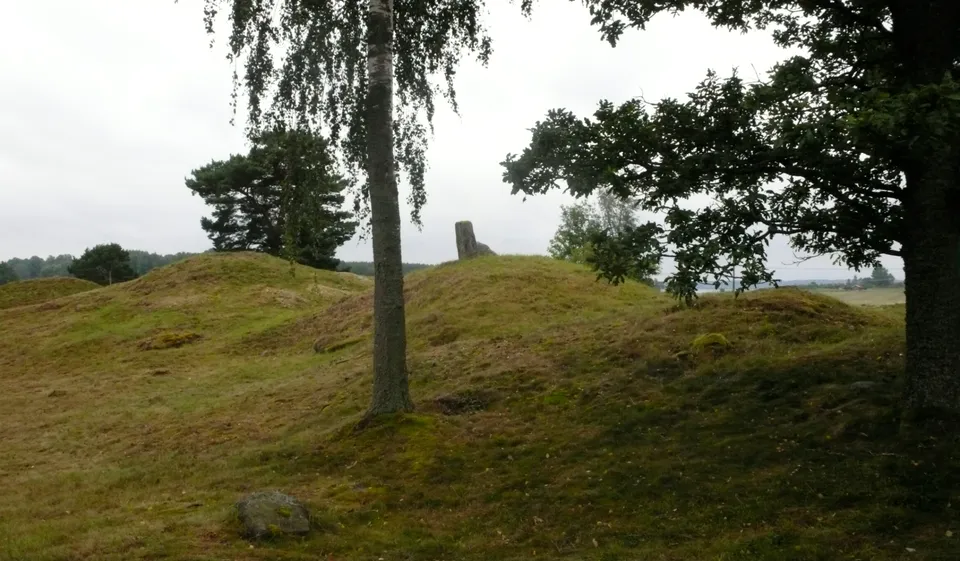
With my week coming to a close, we decided to travel to the countryside for the closing of summer, as well. To Väsby we went. The more we left the city, the more, again, I saw America. Not just in the rolling fields of wheat, corn, and soy but in the people and habits, as well.
Being the assistant to a Swedish art director for three years, I picked up a healthy dose of borrowed cultural habits. One I became fond of was snus. So, naturally, coming to Sweden meant I had to try it from the source (despite going in regularly for Swedish-origin snus with my art director already at home). I had to buy a tin of snus in situ, however I was turned by something new to me: a brand of cigarettes that looked eerily close to Marlboro Reds but a bit more plaid.
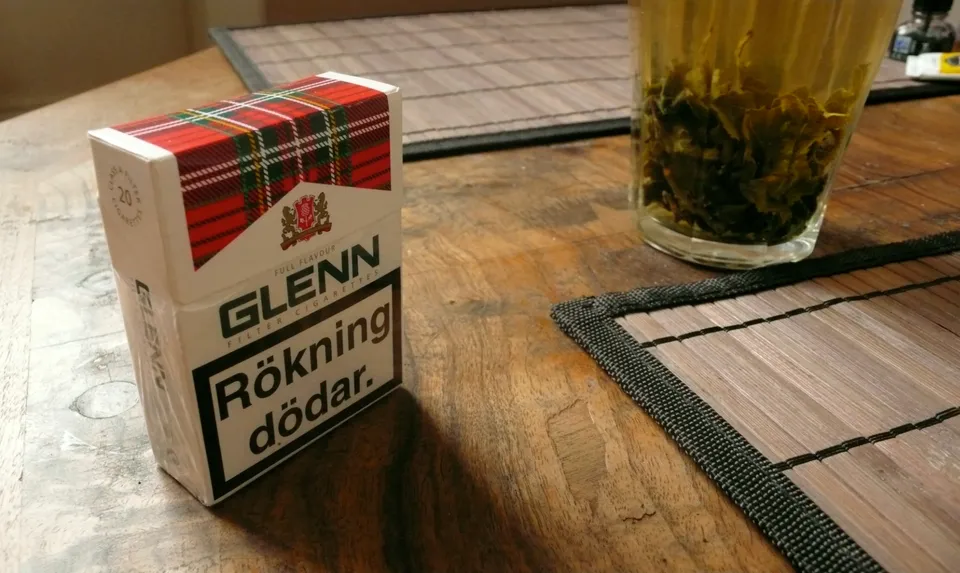
As one travels around the world, it can be said that most of the psychological aspect of travel is done through comparison of where you’ve been and where you’re from. And here I was staring at a pack of, for all intents and purposes, Marlboros by another name. Needlesstosay, with my purchase of a pack of Glenns and a tin of General White Portion, I buzzed my way through the rest of the trip.
Cultural hegemony, in stark contrast to America’s instances of sub-cultures divided by sub-sub-cultures, felt so prevalent in Stockholm. This was wholely evidenced by the coicedental occurance of the World Music Festival happening all over the city in the evenings. What I figured would be limited to my host’s graphic novel festival curated by Kulturhuset, was a bigger picture through-out the city. And this wasn’t limited to objects or ideas of Swedish origin, but global origin, as well. As we ventured through the city one evening, seeping through the thin alleyways, from far away was… yep, that’s gotta Carribea’s version of Reggaeton. Weaving through every empty storefronted side streets was the odd sounding, in this context, Dance Hall. Alas, as we got closer to the open intersection of several museums that posed as a large stage with hundreds upon hundreds of blonde heads staring up at it and bobbing to music created a lake away, I couldn’t help but be dumbfounded. The crowd didn’t merely consist of Mtv-watching teenagers, but, lo and behold, that there is a cute grey-haired couple holding each other warmly. To my left was a forty-something mother, with what appeared to be slippers, on her feet. To my right was an asian couple in their late-60s. Where, in America, I could easily stereotype these instances with imagery of sharpily downturned lips and brows knitted and furrowed so tight they could be making scarves, here there was nothing of the sort. The cornicopia of cultures and ages that made up the crowd challenged what I expected of this artist rapping about dancing close to a “10” in a sweaty club; or discoursing on Marley’s thoughts of peace.
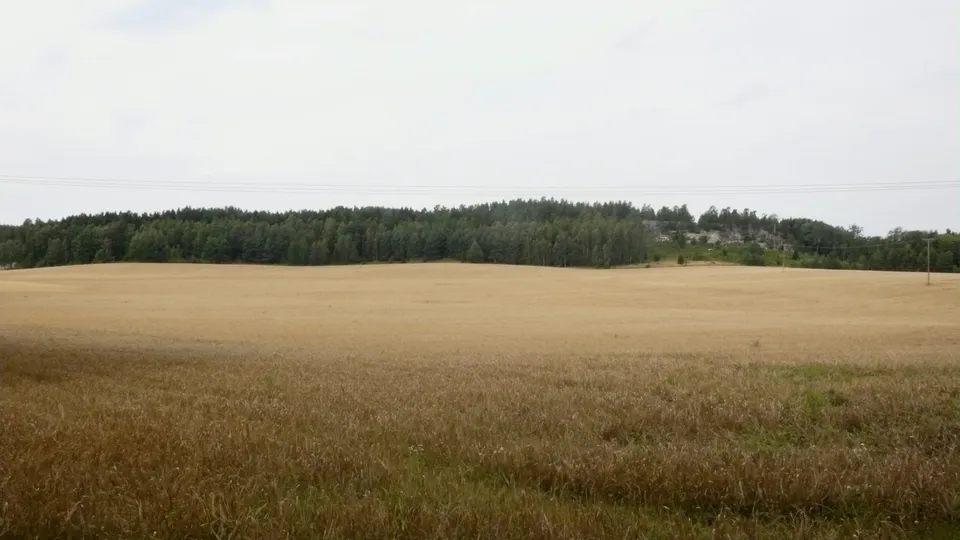
The further out into the country the train took us, however, the more American landscape I saw. This wasn’t a complete surprise to me, for working with a Scandinavian magazine for two years had me consuming work in the likes of Moodyson and Kent, whose themes and backdrops could be recounted in Anywhere, USA; provided ample dubbing. The condominium lots mixed with variable classed cars (a present year Audi parked next to a Ford Focus of several years past) had the same ominous green power boxes I grew up with as a kid, and the same looking plastic siding. Flat wheat fields stretching beyond the horizon with only patches of green forests for punctuation. Really, Sweden hadn’t been the first country I saw mirrored images in. Years prior with a visit to Yokohama and Atsugi, Japan, I found department stores’ department layouts to be nearly identical to those of America (which is probably the only reason I was able to find the music section). But, the similarities I found in Sweden were more than just the physical. The people, though more polite and less aggressive, had the same sort of “I don’t want to be bothered” attitude that I find in many Americans. The same sort of “I don’t want to be bothered” attitude that I find in myself, as well. The same sort of “I don’t want to be bothered” attitude that I find in my friends and family back home. The same sort of “I don’t want to be bothered” attitude that I find in the people around me, wherever I go. The same sort of “I don’t want to be bothered” attitude that I find in the world at large, wherever I go. The same sort of “I don’t want to be bothered” attitude that I find in myself, wherever I go. The same sort of “I don’t want to be bothered” attitude that I find in my friends and family back home, wherever I go. The same sort of “I don’t want to be bothered” attitude that I find in the people around me, wherever I go. The same sort of “I don’t want to be bothered” attitude that I find in the world at large, wherever I go.